A new language for light, a conscious step toward the future.
Learn More Get StartedIt takes shape through a process that intertwines 3D printing and the handcrafting of bacterial cellulose—a sustainable biopolymer grown from plant waste and carefully shaped. UNILUMI is the result of a patient dialogue between nature and technology, between gesture and thought.
UNILUMI is the result of a patient dialogue between nature and technology, between gesture and thought. An innovative project, born from the collaboration between industrial designer Gabriele Rosa and researcher and biodesigner Mariangela Stoppa.
Like the marine sponges that inspire it, each piece grows with its own morphology, guided by the logic of flow and organic transformation.
The bacterial cellulose structure is fully biodegradable. At the end of its life cycle, the lamp can be disassembled: the electronics are recovered, and the material is reintegrated into the environment.
Every piece is unique, distinct in shape and size, marked with an identification code. They all belong to the same family, yet each carries its own irreplicable identity.
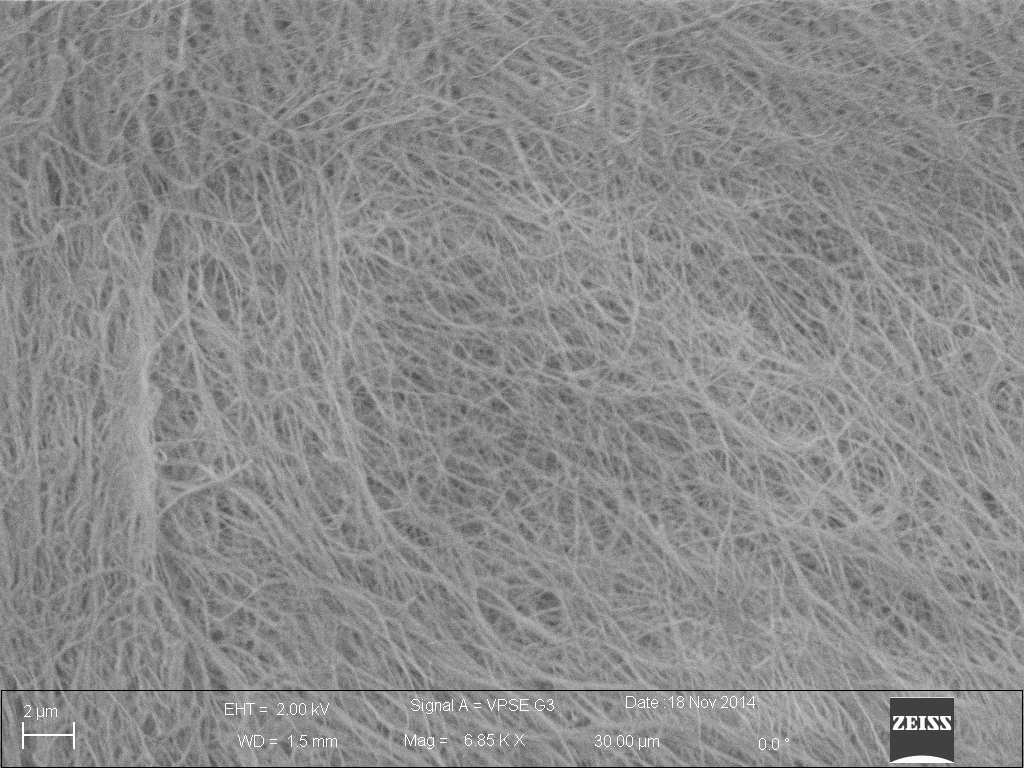
The nanostructured cellulose synthesized in this process self-assembles at ambient temperature and pressure, forming over a period of just a few weeks, further enhancing its sustainability as a biopolymer.
Bacterial Cellulose (BC) is a nanostructured biopolymer composed of three-dimensional nanofibrils, typically ranging from 10 to 100 nanometers in diameter. Each sheet of BC is unique, characterized by high crystallinity, biocompatibility, mechanical strength, and intrinsic purity.
BC is produced through an eco-innovative, low-energy fermentation process driven by bacteria such as Acetobacter xylinum. This method relies on a symbiotic relationship between bacteria and fungi, often found in food products, and takes place in aqueous cultures enriched with sugars derived from agro-industrial waste, including molasses, olive pomace, and olive mill wastewater. These alternative substrates not only nourish the microorganisms but also reduce production costs and environmental impact, aligning with the principles of a circular economy.
Biomimicry introduces us to an era based not on what we can extract from nature, but on what we can learn from it.
contact@youradress.com
support@youradress.com